
1. A Question That Initially Confused Me
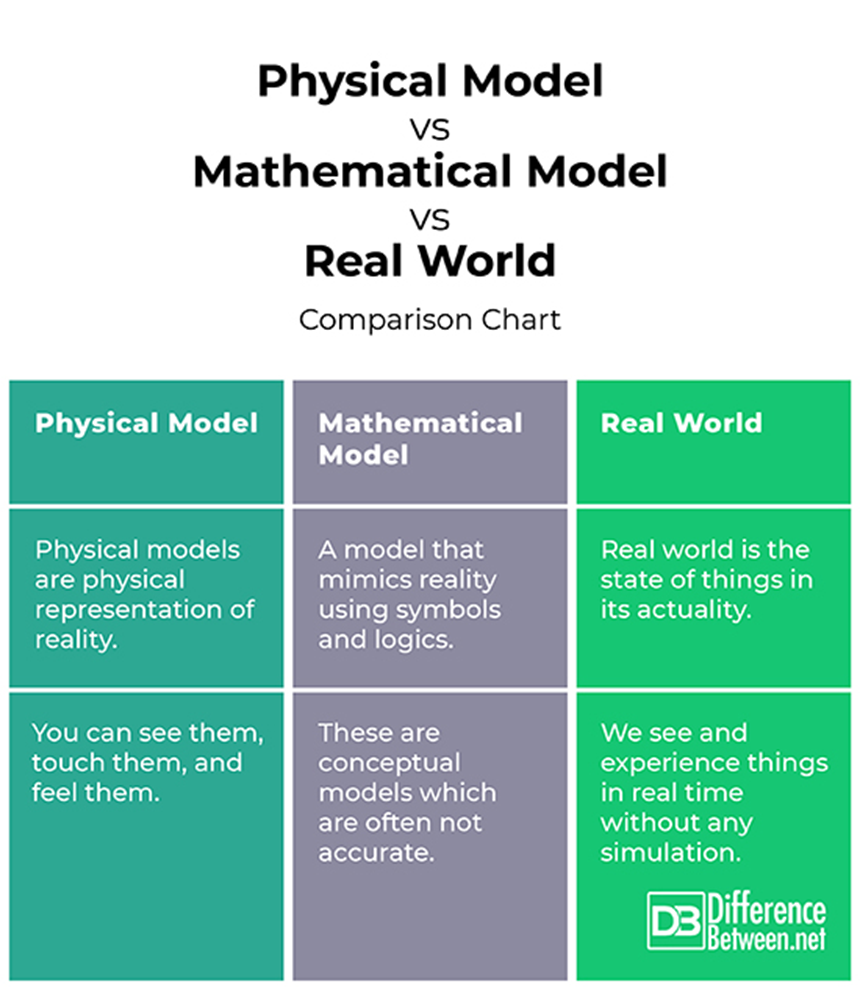
In physics classes, we are repeatedly taught to simplify reality.
We assume:
- strings have no mass,
- surfaces are perfectly smooth,
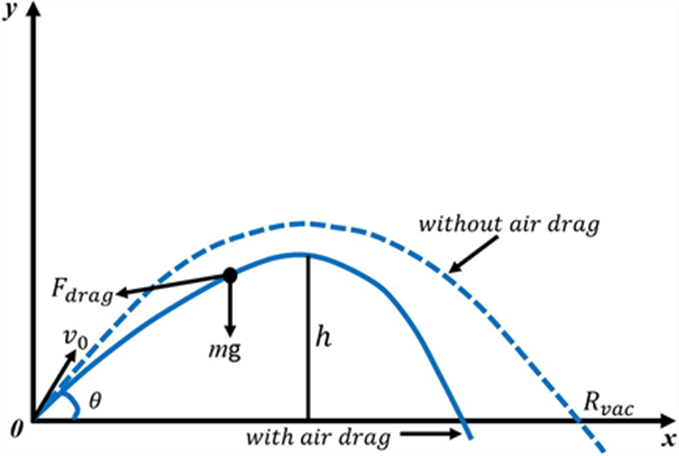
- air resistance does not exist,
At first, this felt unsettling.
If these assumptions are clearly false in the real world,
why do physicists insist on using them?
And more importantly:
how can a model that is “wrong” still produce correct predictions? This question stayed with me longer than most formulas I memorized.
2. A Familiar Example: The Simple Pendulum
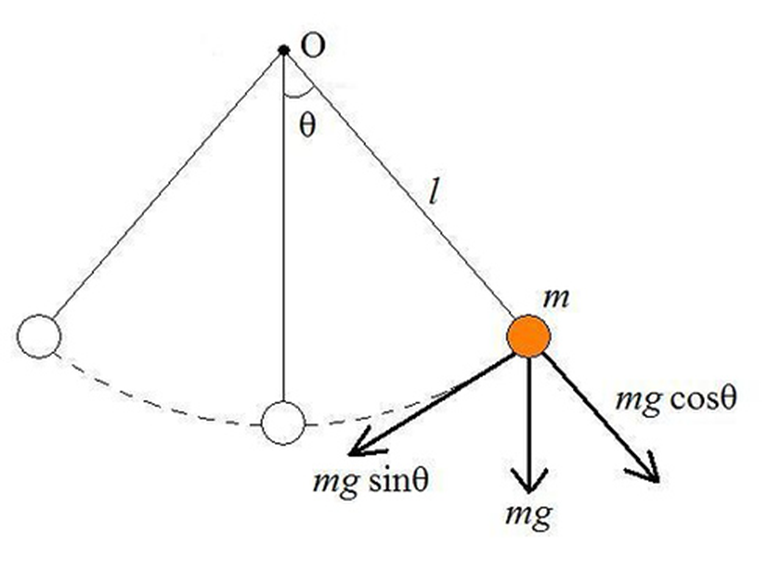
Consider the simple pendulum.
In textbooks, its period is given by:
[
T = 2\pi \sqrt{\frac{l}{g}}
]
This result depends only on the length (l) and gravity (g),
and not on:
- mass,
- amplitude,
- shape of the bob.
However, this formula only holds when the swing angle is small.
So here is the puzzle: If the model breaks down at larger angles,
why do physicists still trust it so much?
3. The Hidden Assumption That Makes Everything Work
The key lies in a subtle assumption:
[
\sin\theta \approx \theta \quad \text{(for small } \theta \text{)}
]
This approximation is mathematically convenient and physically powerful.
Once this assumption is made:
- the equation of motion becomes linear,
- the system behaves like simple harmonic motion,
- the motion becomes solvable exactly.
The model is not accidentally wrong.
It is deliberately simplified to isolate the dominant behavior.
4. When the Model Starts to Fail
What happens if we violate the assumption?
- At larger angles:
- the period increases slightly,
- the motion is no longer perfectly harmonic,
- the exact formula becomes more complicated.
But here is something interesting:
Even when the approximation fails,
the small-angle model still gives surprisingly good predictions
for moderate angles.
This taught me an important lesson: A model does not need to be perfectly true
to be scientifically useful.
5. Why Physicists Prefer Simple Models
At first, I thought physics was about finding the most accurate description of reality.
Now I see it differently.
Physics is about finding:
- the right level of abstraction,
- the dominant factors in a phenomenon,
- a model that is simple enough to understand,
yet accurate enough to predict.
This is why physicists often ask:
- What can we safely ignore?
- What assumption matters the most?
A good model is not the most detailed one,
but the one that reveals structure.
6. A Broader Pattern in Physics
Once I noticed this, I saw the same pattern everywhere:
- Projectile motion ignores air resistance,
- Ideal gases ignore molecular volume,
- Point masses ignore size and shape.
These models are all “wrong” in detail,
yet deeply correct in insight. They are not lies.
They are controlled approximations.
7. Reflection: What This Changed About My Thinking
This realization changed how I approach physics problems.
Instead of immediately searching for formulas, I now ask:
- What assumptions am I making?
- When might they fail?
- What would happen if I relaxed one of them?
To me, this is where physics becomes creative,
and where it starts to resemble real scientific thinking rather than exam preparation.
8. What I Want to Explore Next
This question naturally leads to new directions:
- How large can the pendulum angle be before the approximation truly fails?
- Can we quantify how wrong a model is?
- How do physicists decide which errors are acceptable?
These are questions I hope to explore in future articles.
Physics does not begin with perfect models.
It begins with imperfect ones — used wisely.